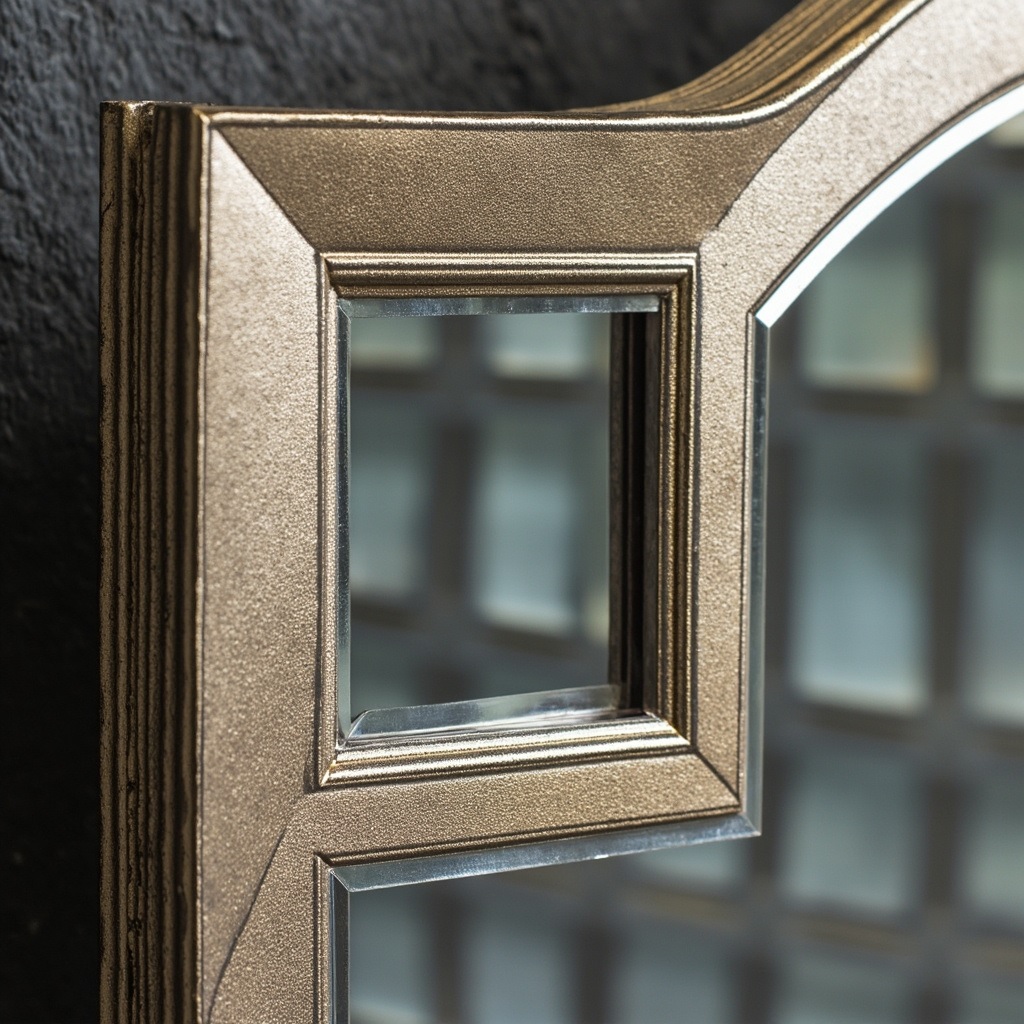
 Walk into any high-end boutique hotel or a designer’s personal loft, and you’ll notice it immediately. The mirrors don’t just reflect the room; they command it. The frames hold a certain depth, a metallic whisper that feels both industrial and luxurious. That is not paint. That is not a simple polish. That is the result of a controlled electrochemical transformation known as anodizing. Most people think a mirror frame is just a piece of metal shaped to hold glass. The reality is far more complex and, frankly, far more beautiful. We are talking about a science that turns aluminum into something that resists the brutal passage of time while looking like it was forged in a jeweler’s workshop.
The secret lies in the bath. Anodizing is not a coating that sits on top of the metal like a cheap sticker. It is a forced oxidation. We submerge the frame in an acid electrolyte and run a current through it. This process grows the natural oxide layer of the aluminum, creating a surface that is actually part of the metal itself. It is incredibly hard—harder than the base Aluminum Alloy Mirror Frame will not chip when you bump it with a vacuum cleaner. It will not peel when the humidity in your bathroom spikes. It is a permanent armor.
But here is where the marketing meets the magic. The science of anodizing allows us to play with light in ways that paint simply cannot replicate. By controlling the voltage, the temperature, and the duration of the bath, we can create a porous layer that absorbs color dyes at a molecular level. This is not a surface stain. The color is locked into the structure of the metal. This gives the frame a metallic luster that shifts as you walk past it. A brushed silver frame catches the morning sun differently than it catches the evening lamplight. A deep champagne or a gunmetal grey frame feels rich because the light penetrates the surface, bounces off the metallic base, and comes back through the color layer. Paint just sits there and blocks the light. Anodizing invites the light inside.
For the decorator or the homeowner who wants longevity, the advantage is brutal and simple. Scratches happen. On a painted frame, a scratch reveals the raw, ugly metal underneath. It screams “cheap.” On a properly anodized frame, a scratch is a whisper. Because the finish is integral to the metal, a minor abrasion often just exposes the same anodized layer, or a very similar tone. The frame maintains its integrity. It looks old, perhaps, but never broken.
We also solve the problem of fingerprints. Nobody wants to see their own oily handprints on a beautiful mirror frame. The anodized surface is non-conductive and non-porous once sealed. It resists corrosion from the oils in your skin. A quick wipe with a dry cloth restores the factory finish. It is a low-maintenance luxury that performs like a workhorse.
So when you look at a decorative mirror frame, do not just see the shape. See the science. See the fact that the finish will not fade under UV light for decades. See the fact that it is environmentally cleaner than painting because the process uses no volatile organic compounds. You are buying a piece of metal that has been transformed at the atomic level. It is not just a frame. It is a durable, luminous, and scientifically superior statement piece that will outlast the trends that brought it into your home. That is the complete science. That is the value.